Wednesday, December 19, 2018

Climate Change

Climate Change
Climate change isn’t a cliff we fall off, but a slope we slide down.
Kate Marvel

Our point of view:
  • Climate change is happening.
  • It's largely human-induced. 
  • We are past the point of no return.
  • Going forward, adjustments and adaptation will be the modus operandi (MO).
  • The least prepared or able to adjust and adapt will bear the brunt of the effects.This is an environmental justice issue.

Bill Gates on Energy 
Global Energy Forum, Stanford, Nov 1-2, 2018. 36 min video.  

Barry Ritholtz Interviews Jeremy Grantham 
Sobering comments on the environment, climate change, and investing. 69 minutes. 

This is What We Use to Come to Our Point of View
Ocean Shock (Added 12-26-18) 
A Kind of Dark Realism (Added 12-6-18) 
Fourth National Climate Assessment (Added 12-1-18) 
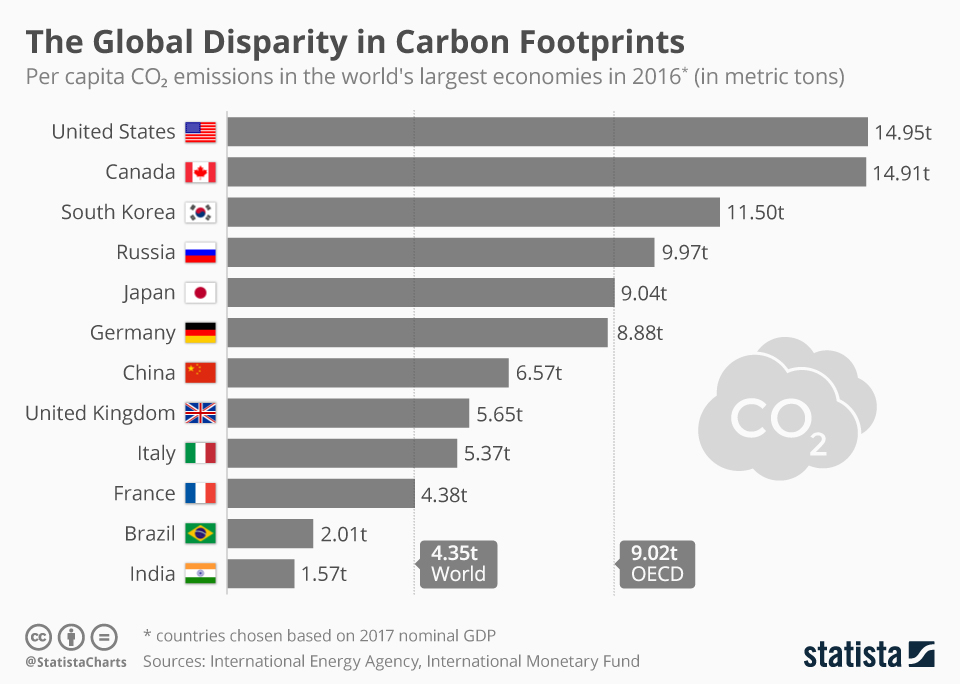
Global Inequalities in CO2 Emissions (Added 12-1-18) 
CO2 Emissions on the Rise (Added 12-1-18)
The 2018 Report on Health and Climate Change (Added 12-1-18) 


 Q: Is there a way to invest in companies engaged in fighting climate change?
A: We believe climate change is a done deal-- that it is not reversible in our lifetimes-- and that the impacts are likely to become more frequent, serious, widespread, and long-lasting.

We believe it's impossible to know ahead of time and with high conviction, which companies will succeed in delivering solutions for preventing, responding to, or adapting to climate change.
11-25-18

Tuesday, December 18, 2018

Podcasts & Slide Presentations

These podcasts and presentations cover a range of topics from investing and business to politics and general interest. Enjoy them at your leisure. 

Adam Robinson on Farnam Street's Knowledge Project
This is an incredible 2 hour interview. Here are some highlights:

  • The Great Game is life.
  • Our views of the world are reflected back to ourselves by the internet.
  • By quantitative measures, people should be happier, and yet they’re not. 
  • One of the problems with self-help books is they rivet your attention on exactly the one thing it ought not to be focused on: yourself. 
  • Focus on others; be of service to others. 
  • In America, we’ve deified “intelligence." That works against you. 
  • I think it’s important that parents let their children know that learning is hard. 

Barry Ritholtz Interviews Jeremy Grantham 
Sobering comments on the environment, climate change, and investing. 69 minutes.

GOP Strategist Rick Wilson
Conservative Republican campaign consultant and author of Everything Trump Touches Dies: A Republican Strategist Gets Real About the Worst President. 53 minutes.

Rick Ferri Interviews Jack Bogle
In this 68-minute interview, Ferri walks Jack through the founding of the Vanguard Group and the core principles that inform sound investing. If you're an experienced investor or just getting started, this is worthwhile.

Hey, 49ers Fans. Jed York Here.
Freakonomics Radio goes long and deep into the industry, the team, the players. 60 minutes.

Mary Meeker's 2018 Internet Trends Report
Curious about where digital technology is headed? This is a 294 slide presentation. Quite informative and sometimes even shocking. Start at Page 4, the Table of Contents; pick and choose your interest.

Monday, December 17, 2018

Things to Ponder

Things to Ponder

  1. being outside your normal environment or routine
  2. being in the presence of a group
  3. being in the presence of an expert (or when you believe you’re the expert)
  4. doing any task that requires intense focus
  5. getting stuck in information overload
  6. being physically or emotionally stressed or fatigued
  7. rushing or feeling a sense of urgency 
US GDP is $19 trillion. China is 2nd at $12 trillion. Japan and Germany are 3rd and 4th at about $5 trillion each. Together, these countries account for half of global output. 

Yet, other interpretations (here, here, and here) present different impressions. Perhaps it boils down to the metric you use.

In a Bloomberg piece titled Get Used to it America: We're No Longer #1, we see that China and the US are of comparable size, yet China is more likely to grow larger and more influential.

Expectation Versus Reality
We all face events (both positive and negative) that we did not expect, but this doesn’t mean we are doomed.  There are some basic rules for survival and recovery: 
  • Have sufficient rations.
  • Re-evaluate your plan and make needed changes.  
  • Don’t give up. 
Of Order and Chaos
We seek the ordered, the linear, and the smooth; the world gives us the chaotic, the curved, and the jagged.  This dichotomy is as old as history itself—order versus chaos. So don’t be drowned by negativity when things don’t go as planned. This is the natural state of the universe. Sometimes you win. Sometimes you lose. The important thing is to not get consumed by the chaos.
December, 2018 

Blind to Luck
"Investors fail to understand that, in large populations of mutual funds, a few will outperform by pure chance...In addition, investors do not sufficiently account for volatility and are thus likely to confuse risk taking with skill."
Basically, we all tend to attribute outcomes to skill where, in fact, luck matters most.
December, 2018

Late Cycle Lament: The Dual Economy, Minsky Moments, and Other Concerns
This excellent paper by James Montier at GMO delves into how overoptimism and overconfidence are particularly dangerous in the late stages of an economic cycle. Specifically, this leads to overestimating return and underestimating risk. Montier shows how the current US economy is the slowest and weakest in post WWII history. He describes the dual economy, where prosperity is reasonable in some sectors and totally absent in others. He further elaborates on systemic vulnerability and the potential making of a Minsky Moment.  He then shows how all this is occurring against the backdrop of an extremely expensive US equity market. In the end, you have to ask yourself what your minimum and maximum exposure to the US stock market ought to be. GMO is essentially at zero in their unconstrained portfolios. 
December, 2018 

Historic Returns in Bonds 
Investors would be wrong to always assume that bonds produce positive returns. Surely, negative returns do not happen with the frequency or severity seen in stocks, but even small losses can erase inflation-adjusted gains. 
December, 2018 

The Farnam Street Latticework of Mental Models

Mental models are how we understand the world. They are simple representations of how things work. We cannot keep all the details of the world in our brains, so we use models to simplify the complex into understandable and organizable chunks.

The quality of our thinking is proportional to the models in our head and their usefulness in the situation at hand. The more models you have—the bigger your toolbox—the more likely you are to have the right models to see reality. It turns out that when it comes to improving your ability to make decisions
variety matters.

Most of us, however, are specialists. Instead of a latticework of mental models, we have a few from our discipline. Engineer think in systems. Psychologists in terms of incentives. Biologists in terms of evolution. By using different systems we can wrap our minds around a problem in many different ways. If we only use one way, got a blind spots. And blind spots can kill you.

Mental Model Toolbox
This essay is a collection of 109 mental models. Building your latticework is a lifelong project. Stick with it, and you’ll find that your ability to understand reality, make consistently good decisions, and help those you love will always be improving.
December, 2018 

Twelve Lessons on Risk and Uncertainty
Long read. Worth it. 

The Loud Impact of a Quiet Ego
Being a long-time meditator, I was pleasantly surprised at coming across this.


Wednesday, October 17, 2018

Re-Thinking Risk

Re-Thinking Risk

Most people tend to think of risk as sharp, dramatic downward movements of prices. That's why financial markets are viewed as risky. So, what are sharp, dramatic upward movements of prices? Is that risk?

They are both risks, but not in the simplistic way most people view them.

In his book Deep Risk, Bill Bernstein describes two different types of risks in financial markets:

One is "shallow risk,” a temporary loss of capital that is recovered fairly quickly, say within several years; and “deep risk,” a permanent loss of capital.

Put differently, shallow risk, if handled properly, deprives you only of sleep for a while; deep risk deprives you of sustenance.

Stock market crashes tend to fall into the shallow risk pile. Even the most brutal crashes are basically rip the band-aid off quickly events. The Dotcom Crash of 2000-2002 and the Great Financial Collapse of 2007-2009 were not easy and didn’t allow you much time to second guess your decisions. Yet, all the price damage-- the shallow risk-- was earned back in five years.

That said, people who decided to "be more conservative" in the wake of those events succeeded in converting shallow risk to deep risk-- they sold at a loss and converted shallow risk to deep risk-- the permanent loss of capital.

Perhaps surprisingly, bond bear markets are actually of the deep risk variety. They don't even show up on your account statements. They're the ones that slowly drain purchasing power and compromise your standard of living. It's the erosive grind of inflation; death by a thousand cuts.

That's why it's so important to understand household cash flow needs when making asset allocation decisions. You want to be in the position of ignoring shallow risk while guarding against permanent deep risk. Bernstein again:

Capital intended for near-term needs should be guided by shallow risk, while capital managed for long-term needs should be guided by deep risk.

The most important first step for any investor is to approach the markets with a deep understanding of their personal time horizon and risk profile. When will money need to be spent, and how much will be spent? Which type of risk are you willing to endure?

A default for this is to keep any capital likely to be used in the next five years behind a stock market firewall. Leave it in a checking account, savings account, CDs, bond funds, under the mattress. For the rest, you want to be most mindful of deep risk.

Inspiration for this post came from Ben Carlson's Worst Kind of Bear Market.

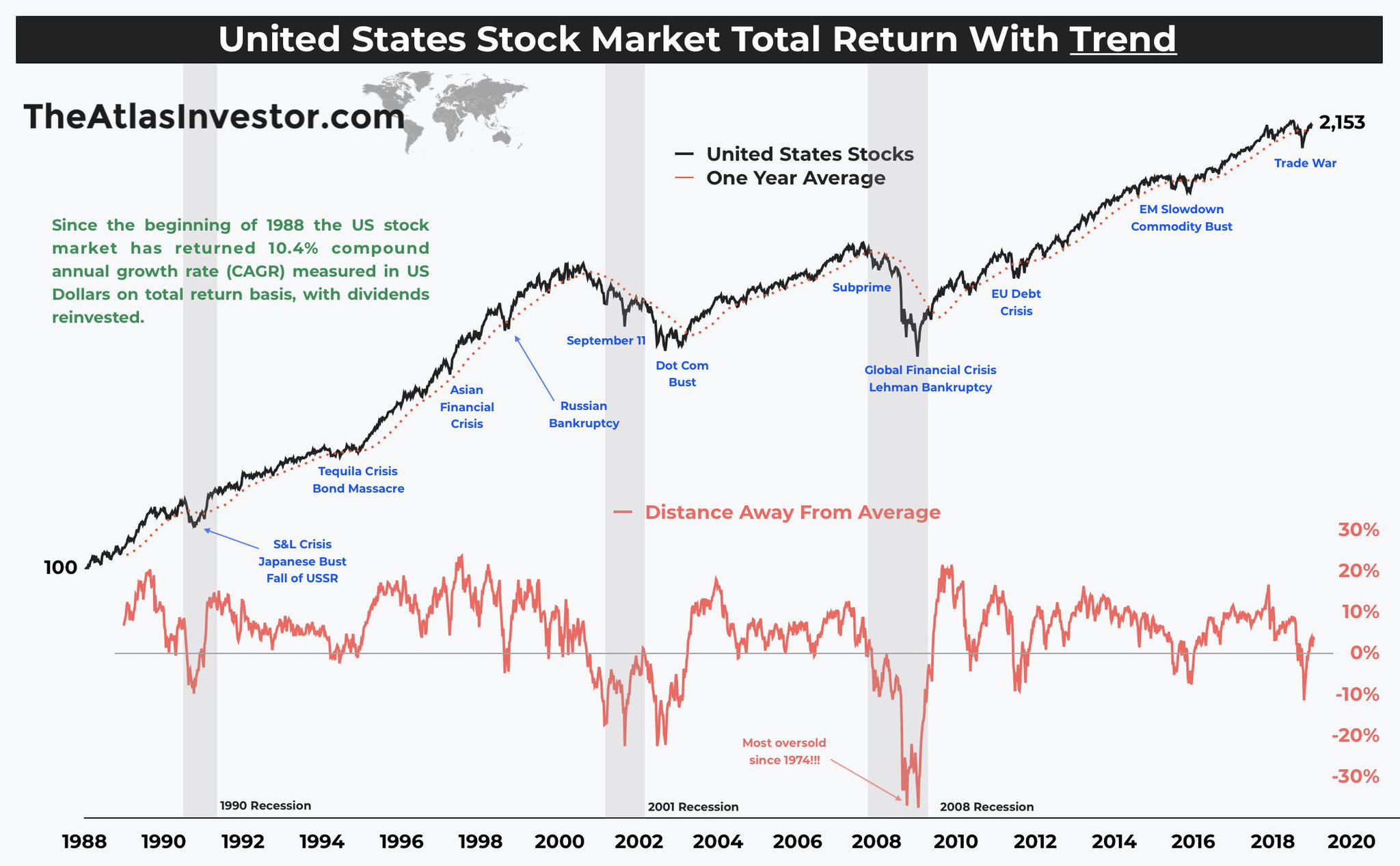
Another way of looking at risk is offered here. The chart in red is a mean-reverting representation of how
over or under extended prices might be. None of this is rocket science precision.