Tuesday, June 16, 2026

What We're Thinking: Your Personal Finance Game Plan for 2026-2028


From now until the 2028 election, we’ll be told with great confidence about what the economy will do, what Washington will do, what markets will do, how much of an impact AI will make, and what you must do about it.

This is mostly theater because markets, economics, and politics are multi-variate, non-linear systems. That's fancy language for something that has a lot of seemingly unrelated moving parts, where small changes can produce huge reactions in unexpected places, and where very little is predictable. This is not new. We just hear about it sooner than we ever have.

There are two elections, a new Federal Reserve board chairman, and adjustments in Middle East geopolitics that will challenge the most carefully crafted strategies. Looking back on New Years Eve 2019, no one had COVID (literally), the 2022 inflation, the 2025 Tariff Tantrum, or a military action in 2026 on their screens. Statistically speaking, someone will call what comes next. And statistically speaking, the odds of finding that someone round to zero. Risk is what’s left after we’ve thought of everything else.

So, what hasn't changed? And what can you control?

✅The importance of asset allocation and diversification. A portfolio spread across multiple asset classes, geographies, and company sizes does that work. Underperformers will recede in value while the things that are working grow larger. That’s why, if you’ve owned a large company investment fund, you’ve actually owned some Nvidia since 2001, when it replaced Enron in major market indexes. No guessing or research was needed. You control this. You decide what, where, and how to allocate and diversify. We can help with that.

Having a clearly articulated strategy. Complexity and over-thinking invites tinkering. Tinkering often leads to unforced errors and self-inflicted damage. If you’re not clear about what your strategy is, we need to talk. 

✅The quality of media. Headlines are optimized for emotion and urgency. “If it bleeds it reads.” “News” is actually opinion, no matter which political color you identify with. Don’t conflate politics with your portfolio. 

✅The urge to “do something.” We all get that from time to time, especially when emotions are running hot. If a strong opinion calls to you, create a financial sandbox. Put money in it that won’t change your life if you lost it. That will minimize any damage and manage your FOMO.

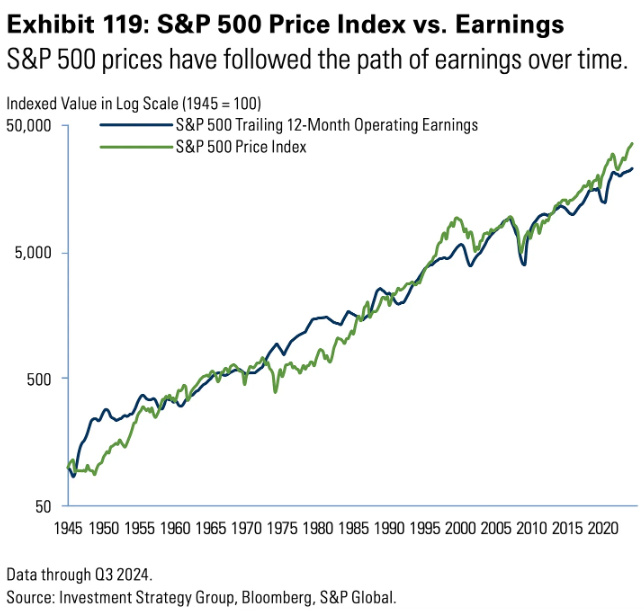
✅Long-run stock returns closely reflect corporate profits. As we’ve shown in prior Considerations, that’s been the case for over a 100 years. That said, U.S. large growth company valuations—the premium that investors are willing to pay for those earnings—are historically rich. That takes us back to asset allocation and diversification, which rewards patience more than activity.

“Unprecedented” events will continually pop up. But no matter what unfolds, these five pillars will help you stay the course according to your goals, time horizon, and tolerance for discomfort. We’re here to travel this journey with you. 


 James Cosgrove, CFP, Plano, TX jim.cosgrove@verizon.net 972-489-0262
Jim Cosgrove, Partner, San Jose, CA jimcos42@gmail.com 408-674-6315

Evidence-based. Rules-driven. Policy-focused.


Sunday, March 29, 2026

What We're Thinking: Another 25 Years


Back in the Spring of 1991, I joined IBM's Quarter Century Club, marking 25 service years. Now, in the Spring of 2026, I'm celebrating another Quarter Century milestone, this time as an independent, freelance financial advisor. Two quarter centuries in one lifetime. Who knew? 

Doing what I'm drawn to do, I've pulled together some financial stats from the last 25 years. Here's what's happened on an average annualized basis: 

Inflation/CPI                                                 2.5%
All fixed income (cash, CDs, bonds)           3.5%
Portfolios of 40% stocks and 60% bonds    4.1%
Bay Area residential real estate                   4.7%
Portfolios of 50% stocks and 50% bonds    5.2%
Portfolios of 60% stocks and 40% bonds    6.3%
Portfolios of 80% stocks and 40% bonds    8.4%
 
The great news is that everything has stayed well ahead of inflation. Not only has wealth been preserved, it's been enhanced. This is not a forecast, a prediction, or investment advice.

Now, zooming in to the Main Event.  

We're a bit more than halfway through this decade and there have been four "disruptions" no one predicted. COVID in 2020-21, 9% inflation in 2022, a Tariff Tantrum in 2025, and now a "military operation" in Iran.

Keep this in mind the next time you hear an "expert" or "influencer" tell you what's about to happen and what you must do now! Predictions are useful for eliminating things to worry about. It's been said that "risk is what's left after you've thought of everything else." Which leads to the next point: It's impossible to worry about unknown unknowns.

The table below highlights market data points we follow as of March 27, 2026. Notice that none of them are personal or political. We don't conflate personalities or politics with personal finance. That dog don't hunt.


Mar 2020

Oct 2022
Apr 2025
Mar 2026
Notes

COVID

Inflation
Tariffs
Iran


Money market funds 0.10%

4.00%
4.20%
3.60%
1
US Treasury 10-year bond yield 0.80%

4.00%
4.00%
4.30%
2


Brent North Sea oil $32

$83
$92
$114
3


CNN Fear & Greed Index 2

16
4
10
4
Peak VIX   85

36
60
35
5


Balanced portfolios prev 12 months-23%

-29%
-20%
-8%
6
Balanced portfolios next 12 months+42%

+18%
+26%      ?

Notes:

1. Most banks are still paying .1%. The difference between that and 3.6% is how we're able to get free checking accounts. 

2. This is the key indicator for fixed income. The rate has fluctuated between 3.3% and 5.0% since 2022. As long as it stays under 5%, all's well. Not a prediction or investment advice.

3. Few paid much attention to oil until lately. Suddenly, everyone's an oil expert. What's most useful to know is that oil above $90 puts pressure on global finances, discourages drillers, and punishes consumers. There are incentives all over to get this mess cleaned up.

4. The CNN Fear & Greed Index is a reliable short-term measure of financial market sentiment. Anything under 25 is Extreme Fear. As Warren Buffet has said, "Buy when people are fearful." Not investment advice.

5. VIX is the Chicago Options Exchange Volatility Index. It's another measure of sentiment widely used by professionals. Readings above 30 have been harbingers of better times.

6. Balanced portfolios are found as funds and ETFs at Vanguard, Fidelity, Schwab, and your own favorite broker. Most investor's portfolios are pretty close to these. Check with us to talk about what you have.

So, that's where we are. A long time ago, I heard someone say, "Things are never as bad as they seem, or as good as they seem." If you'd like to chat about any of this, or even tell us how we're getting it all wrong, we'd love to hear it.

 James Cosgrove, CFP, Plano, TX jim.cosgrove@verizon.net 972-489-0262
Jim Cosgrove, Partner, San Jose, CA jimcos42@gmail.com 408-674-6315

Evidence-based. Rules-driven. Policy-focused.


Tuesday, March 3, 2026

What We're Thinking: What Happens in Markets During Wars?

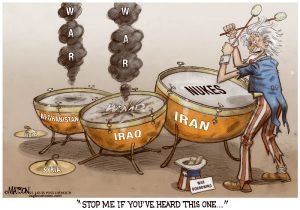
 war drums

They're at it again. When will we ever learn?

In the meantime, financial markets are in the news and you might be wondering how to navigate this particular case. We take a broader, long-term view of historical precedents. Here's what we see.

There are eleven war cases, going back to Pearl Harbor. One year later, the S&P 500 was higher in eight of the eleven cases. That's a 72% positive rate. And it's only for one year. Longer time frames produce outcomes exceeding 90%. 


The main long-term driver of stock market returns is not war or peace. It's corporate earnings (profits). Except in recessions, profits continuously move higher. Here's an 80-year illustration. Earnings are in black. The S&P 500 is green. 

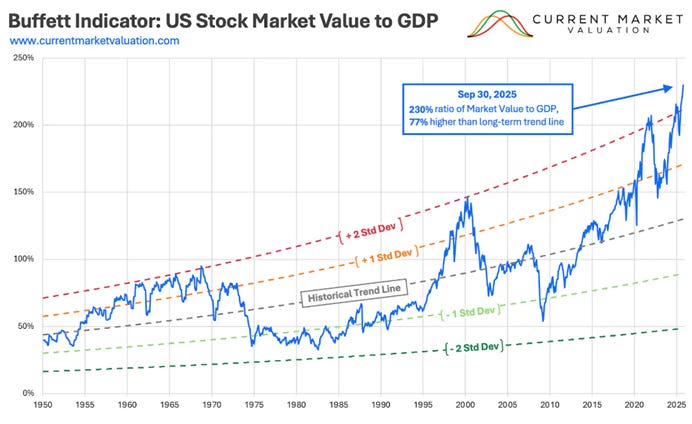
As usual though, there's a caveat. In this case it's valuation.

Valuation is an expression of the premium above fair value that buyers are willing to pay. At this point, buyers are paying a historically high premium for U.S. stocks. (International stocks are closer to fair value.)


This doesn't necessarily mean there has to be a crash. It does mean we should expect lower average annual returns going forward. Some analysts are calling for low single-digit average annual returns for the next 10 years. We actually use those conservative values in estimating low ranges of future portfolio values. 

If any of this concerns you or you just want to talk about it, we're here. We can have the conversation that uniquely applies to you.


James Cosgrove, CFP, Plano, TX jim.cosgrove@verizon.net 972-489-0262
Jim Cosgrove, Partner, San Jose, CA jimcos42@gmail.com 408-674-6315

Evidence-based. Rules-driven. Policy-focused.