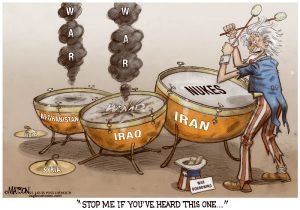
They're at it again. When will we ever learn?
In the meantime, financial markets are in the news and you might be wondering how to navigate this particular case. We take a broader, long-term view of historical precedents. Here's what we see.
There are eleven war cases, going back to Pearl Harbor. One year later, the S&P 500 was higher in eight of the eleven cases. That's a 72% positive rate. And it's only for one year. Longer time frames produce outcomes exceeding 90%.

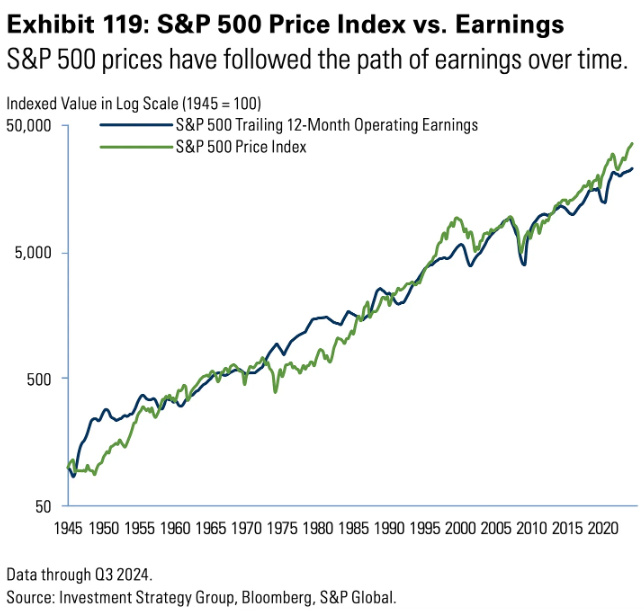
The main long-term driver of stock market returns is not war or peace. It's corporate earnings (profits). Except in recessions, profits continuously move higher. Here's an 80-year illustration. Earnings are in black. The S&P 500 is green.
As usual though, there's a caveat. In this case it's valuation.
Valuation is an expression of the premium above fair value that buyers are willing to pay. At this point, buyers are paying a historically high premium for U.S. stocks. (International stocks are closer to fair value.)
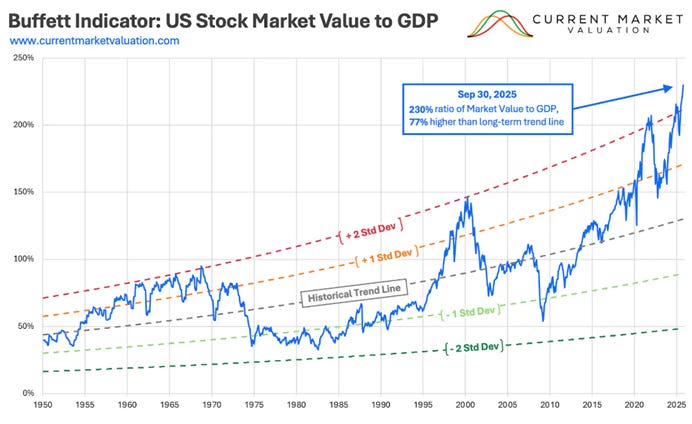
This doesn't necessarily mean there has to be a crash. It does mean we should expect lower average annual returns going forward. Some analysts are calling for low single-digit average annual returns for the next 10 years. We actually use those conservative values in estimating low ranges of future portfolio values.
If any of this concerns you or you just want to talk about it, we're here. We can have the conversation that uniquely applies to you.
James Cosgrove, CFP, Plano, TX jim.cosgrove@verizon.net
972-489-0262
Jim Cosgrove, Partner, San Jose, CA jimcos42@gmail.com
408-674-6315
Evidence-based. Rules-driven. Policy-focused.
